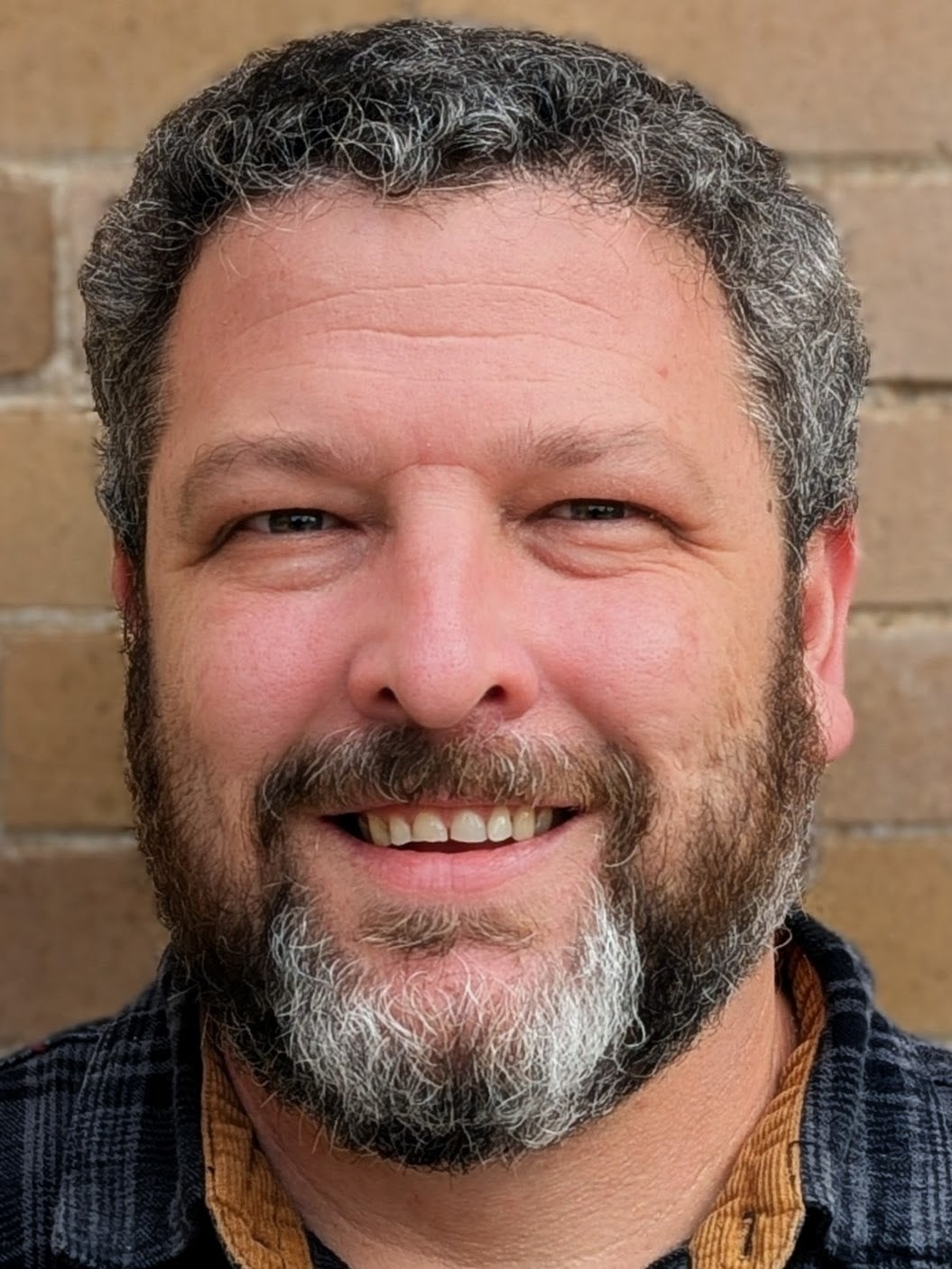
H. Andrew Schwartz
Associate Professor of Computer Science and Psychology;
Director, Human Language Analysis Beings (HLAB) ;
Lead, Methods Core, CREATE: The Center for Advancing Therapy with AI;
CO-PI World Well-Being Project (Consortium)
Google Scholar
Education
University of Central Florida, PhD in Computer Science
University of Pennsylvania, Postdoctoral Fellow
About
H Andrew Schwartz is Associate Professor of Computer Science & Psychology at Vanderbilt University and Director of the Human Language Analysis Beings (HLAB) which he founded at his prior post at Stony Brook University in 2015. The 2020 recipient of a DARPA Young Faculty Award, Andrew is the Co-Lead of the Methods Core for CREATE, The Center for Advancing Therapy with AI. He participates in public service for computing such as the UN Global Working Group on Big Data for Official Statistics and active contributes to the open-source community such as developing and co-maintaining the of the established Python package, Differential Language Analysis ToolKit (DLATK) as well as the R-Text package, which brings the language modeling technology to the R language and psychological science. Andrew received his PhD in Computer Science in 2011 from the University of Central Florida and later served as a Postdoctoral Fellow and as the Lead Research Scientist for the World Well-Being Project (WWBP) at the University of Pennsylvania, studying with Martin Seligman in Psychology and Lyle Ungar in Computer & Information Science.
Research Focus
Improving the state of the art in NLP and artificial intelligence (AI) — modeling language in its human, social, cognitive, and temporal contexts.
Investigating language and speech as a window into the human condition —
mental health, fundamental human traits, and behavioral motives.
Publication Highlights
Ganesan, A. V., Varadarajan, V., Kjell, O. N., Ringwald, W. R., Feltman, S., Luft, B. J., … & Schwartz, H. A. (2026). From Word Sequences to Behavioral Sequences: Adapting Modeling and Evaluation Paradigms for Longitudinal NLP. In ACL-2026: The 64th Annual Meeting of the Association for Computational Linguistics.
Mangalik, S., Eichstaedt, J. C., Giorgi, S., Mun, J., Ahmed, F., Gill, G., … & Schwartz, H. A. (2024). Robust language-based mental health assessments in time and space through social media. NPJ Digital Medicine, 7(1), 109.
Schwartz, H. A., Eichstaedt, J. C., Kern, M. L., Dziurzynski, L., Ramones, S. M., Agrawal, M., … & Ungar, L. H. (2013). Personality, gender, and age in the language of social media: The open-vocabulary approach. PloS one, 8(9), e73791.